Why do I watch the news? It only winds me up…
Watching loads of people queue (not socially distanced!) to come home from their beach holidays in Portugal because the rules about quarantine have changed really irritates me. Has everyone forgotten there’s a pandemic going on?????
Watching loads of people queue (not socially distanced!) to come home from their beach holidays in Portugal because the rules about quarantine have changed really irritates me. Has everyone forgotten there’s a pandemic going on?????
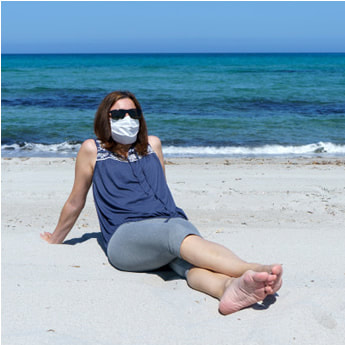
I think there is a degree of complacency creeping into the UK mindset, perhaps because we are no longer bombarded with daily case numbers and death rates on the news. To be honest I don’t mind not hearing loads of bad news, but Covid-19 has not gone away!
Rates around the World are still very high (173,674,509 confirmed cases and 3,744,408 deaths, that’s over 173 million total cases and 3 million total deaths!), and there are also still lots of cases in Europe. The case numbers and trends for the popular holiday destinations are:
It is worrying, but not unexpected, that the really popular summer sun destinations of Spain, Greece and Portugal are all seeing case numbers rising. The more people who visit these countries, the more likely people will take Covid-19 with them, and therefore the more likely they will also bring it back. Perhaps SARS CoV2 will become the most “popular” holiday souvenir of 2021?!
BUT the UK isn’t doing well either. We are now having more than 5,000 cases a day and increasing… which would put us number 2 on the list above!
Let’s confuse everyone … where’s Charlie!?
Just when you thought Covid-19 couldn’t get any more confusing, now the new variants of SARS CoV2 are getting name changes. I suspect the driver for this is to move away from naming variants after the place where they were first detected (which is a very traditional way of naming variants) so that there is no stigma attached to the name.
Countries with good systems in place to detect new variants of virus will disproportionately get blamed for “creating” the new variants. There is already too much blame associated with Covid-19 and this is a way to potentially stop or at least limit this But maybe those in the “let’s change the variant’s name gang” could have done this a year ago, it’s not like we weren’t expecting variants! The main name changes to be aware of are:
So where’s Charlie? It’s actually the Greek alphabet so it isn’t Charlie, “Gamma” should be the 3rd letter! There are also 5. Epsilon, 6. Zeta, 7. Eta, 8. Theta, 9. Iota and 10. Kappa variants, and these are just the variants of “current” concern, and the number of variants are increasing all the time…. And what happens when we run out of letters or get to “Z”?!
I’m not sure it really helps to change the names as the risk of new variants is still the same. And does anyone know the answer to what are the 11, 12, 13, 14, 15, 16 17, 18, 19, 20, 21, 22, 23, and 24th Greek alphabet letters?!! Don’t cheat and look it up on Google!! Answers at the bottom of the blog J. OK I looked it up on Google of course; I went to a standard UK comprehensive school and struggle with English grammar! Greek… really?!
What are the risks from new SARS CoV2 variants?
So, why do we worry about new variants? As SARS CoV2 changes, and new variants appear, there is a risk that Covid-19 infection will also change. The most concerning changes would be those that caused:
We do not want to go back to severe infections with high rates of transmission and a non-immune population… that would essentially put us right back at square one. Remember what it was like in April last year with 1,571 deaths in England alone?! That is the potential risk from new variants of SARS CoV2.
But we’ve all been vaccinated so now we’re safe! Right?!
Okay, vaccination rates in the UK are very good, we’re pretty much leading Europe by a long way where vaccination against Covid-19 is concerned. But this doesn’t mean we can all stop thinking about Covid-19 and start to be blasé about getting exposed to SARS CoV2.
Vaccination does help to prevent Covid-19, and it does help to bring rates of infection down as part of a wider strategy to reduce infections like hand hygiene, face masks and other infection control measures, but it is not perfect at controlling COvid-19 on its own.
Remember, vaccination DOES NOT:
On top of this is the fact that many countries are not doing so well at vaccinating people, and that includes European destinations. The target is 200 vaccines per 100 people i.e. each person should get two doses of vaccine. The current rates of vaccinations per 100 people (total population) are:
And that doesn’t take into account anyone who has travelled to those countries from anywhere else with even lower rates of vaccination or higher rates of infection. You may come into contact with someone else on holiday who has not been vaccinated and who has travelled from a country with lots of Covid-19, and therefore you are at risk of being exposed to infection from them.
So, there is a lot of complaining from the tourist industry, as well as tourists themselves, that it’s unfair that we can’t go abroad for our summer holidays, or that the rules will change whilst we’re away. Well I’m sorry, but I don’t have much sympathy. The situation has been clear from the beginning, just because a country is listed as okay to go to today doesn’t mean it will be tomorrow. The Covid-19 pandemic is a fluid situation with rates of infection changing every day and new variants posing risks of a worsening situation. We have been told not to travel unless it is essential and lying on a beach in Portugal can hardly be said to be essential… can it?!
Wow! I sound like a right grump. Time to go and have a lie down on a sun lounger… at home in the garden of course…. Pour me a cocktail ECIC!!
Answer to the Greek alphabet:
11. Lambda, 12. Mu, 13. Nu, 14. Xi , 15. Omicron, 16. Pi, 17. Rho, 18. Sigma, 19. Tau, 20. Upsilon, 21. Phi, 22. Chi, 23. Psi, 24. Omega
Well done you brainy lot!
Rates around the World are still very high (173,674,509 confirmed cases and 3,744,408 deaths, that’s over 173 million total cases and 3 million total deaths!), and there are also still lots of cases in Europe. The case numbers and trends for the popular holiday destinations are:
- France 7,000 (decreasing)
- Spain 4,500 (increasing)
- Germany 3,000 (static)
- Italy 2,000 (static)
- Greece 1,500 (increasing)
- Portugal 500 (increasing)
It is worrying, but not unexpected, that the really popular summer sun destinations of Spain, Greece and Portugal are all seeing case numbers rising. The more people who visit these countries, the more likely people will take Covid-19 with them, and therefore the more likely they will also bring it back. Perhaps SARS CoV2 will become the most “popular” holiday souvenir of 2021?!
BUT the UK isn’t doing well either. We are now having more than 5,000 cases a day and increasing… which would put us number 2 on the list above!
Let’s confuse everyone … where’s Charlie!?
Just when you thought Covid-19 couldn’t get any more confusing, now the new variants of SARS CoV2 are getting name changes. I suspect the driver for this is to move away from naming variants after the place where they were first detected (which is a very traditional way of naming variants) so that there is no stigma attached to the name.
Countries with good systems in place to detect new variants of virus will disproportionately get blamed for “creating” the new variants. There is already too much blame associated with Covid-19 and this is a way to potentially stop or at least limit this But maybe those in the “let’s change the variant’s name gang” could have done this a year ago, it’s not like we weren’t expecting variants! The main name changes to be aware of are:
- UK (Kent) variant = Alpha variant
- South African variant = Beta variant
- Indian variant = Delta variant
So where’s Charlie? It’s actually the Greek alphabet so it isn’t Charlie, “Gamma” should be the 3rd letter! There are also 5. Epsilon, 6. Zeta, 7. Eta, 8. Theta, 9. Iota and 10. Kappa variants, and these are just the variants of “current” concern, and the number of variants are increasing all the time…. And what happens when we run out of letters or get to “Z”?!
I’m not sure it really helps to change the names as the risk of new variants is still the same. And does anyone know the answer to what are the 11, 12, 13, 14, 15, 16 17, 18, 19, 20, 21, 22, 23, and 24th Greek alphabet letters?!! Don’t cheat and look it up on Google!! Answers at the bottom of the blog J. OK I looked it up on Google of course; I went to a standard UK comprehensive school and struggle with English grammar! Greek… really?!
What are the risks from new SARS CoV2 variants?
So, why do we worry about new variants? As SARS CoV2 changes, and new variants appear, there is a risk that Covid-19 infection will also change. The most concerning changes would be those that caused:
- More severe infection
- Increased transmission and higher infectivity (e.g. R0 >3)
- Decreased effectiveness of immunity from either vaccination of past infection
We do not want to go back to severe infections with high rates of transmission and a non-immune population… that would essentially put us right back at square one. Remember what it was like in April last year with 1,571 deaths in England alone?! That is the potential risk from new variants of SARS CoV2.
But we’ve all been vaccinated so now we’re safe! Right?!
Okay, vaccination rates in the UK are very good, we’re pretty much leading Europe by a long way where vaccination against Covid-19 is concerned. But this doesn’t mean we can all stop thinking about Covid-19 and start to be blasé about getting exposed to SARS CoV2.
Vaccination does help to prevent Covid-19, and it does help to bring rates of infection down as part of a wider strategy to reduce infections like hand hygiene, face masks and other infection control measures, but it is not perfect at controlling COvid-19 on its own.
Remember, vaccination DOES NOT:
- Prevent all Covid-19 – vaccines are between 60 and 90% effective at preventing Covid-19 infection, which means that 10-40% of fully vaccinated people can still get Covid-19
- Prevent severe infection completely – the Covid-19 vaccines are very good at preventing severe Covid-19 infection (hospitalization or death) but some vaccinated people still do get severe infection (vaccination was 87% effective against hospitalisation and 92% effective against severe disease in a study from Israel, but this still means if someone was going to get severe disease before vaccination then 8% of them would still get severe disease after vaccination, that’s huge!!! Put another way, vulnerable people before vaccination are still vulnerable people after vaccination.
- Prevent carriage and therefore transmission – vaccinated people can still carry SARS CoV2 in their upper respiratory tract and therefore spread the virus to unvaccinated people. Kings College found “those who’d had a jab were more likely to be completely asymptomatic”. So vaccinated people can still spread the virus to others including family members e.g. children who can then spread it to other children and other families or grandparents who could spread it to vulnerable or frail elderly friends even if they are vaccinated (10-40% still get Covid-19 after vaccination!)
On top of this is the fact that many countries are not doing so well at vaccinating people, and that includes European destinations. The target is 200 vaccines per 100 people i.e. each person should get two doses of vaccine. The current rates of vaccinations per 100 people (total population) are:
- UK – 102 (on average the UK has given more than one vaccine per person)
- Germany – 65
- Italy – 63
- Spain – 62
- Portugal – 61
- France - 59
- Greece – 58
And that doesn’t take into account anyone who has travelled to those countries from anywhere else with even lower rates of vaccination or higher rates of infection. You may come into contact with someone else on holiday who has not been vaccinated and who has travelled from a country with lots of Covid-19, and therefore you are at risk of being exposed to infection from them.
So, there is a lot of complaining from the tourist industry, as well as tourists themselves, that it’s unfair that we can’t go abroad for our summer holidays, or that the rules will change whilst we’re away. Well I’m sorry, but I don’t have much sympathy. The situation has been clear from the beginning, just because a country is listed as okay to go to today doesn’t mean it will be tomorrow. The Covid-19 pandemic is a fluid situation with rates of infection changing every day and new variants posing risks of a worsening situation. We have been told not to travel unless it is essential and lying on a beach in Portugal can hardly be said to be essential… can it?!
Wow! I sound like a right grump. Time to go and have a lie down on a sun lounger… at home in the garden of course…. Pour me a cocktail ECIC!!
Answer to the Greek alphabet:
11. Lambda, 12. Mu, 13. Nu, 14. Xi , 15. Omicron, 16. Pi, 17. Rho, 18. Sigma, 19. Tau, 20. Upsilon, 21. Phi, 22. Chi, 23. Psi, 24. Omega
Well done you brainy lot!
 RSS Feed
