Sunday night is “Antiques Roadshow night” in our house, every Sunday in the UK the BBC1 broadcast an hour of people bringing their various family heirlooms or jumble sale bargains to antique experts for a brief chat about what they are and how much they are worth. I enjoy the social history side of the show although I find the occasional “money-grabbing” a bit depressing.
Last Sunday, 20th February, was a bit different as I saw a trailer showing something unusual and medical… queue my curiosity! I was glued to the program in anticipation.
It was the last item on the show, and it had been brought in by some school children and their Headmaster and it was this:
Last Sunday, 20th February, was a bit different as I saw a trailer showing something unusual and medical… queue my curiosity! I was glued to the program in anticipation.
It was the last item on the show, and it had been brought in by some school children and their Headmaster and it was this:
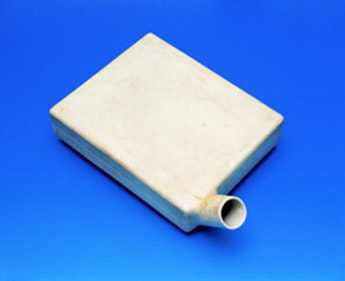
Really!?! What is that!?! Is it a bird, is it a plane, is it a bedpan?… No!
My first impressions were not good… “What do you mean I have waited an hour just to see a square bedpan?!” I thought.
As if reading my mind, the antique expert said “no it’s not a bedpan if that is what you’re thinking” spooky…how did he know that?
So, if it’s not a bedpan, what the heck is it, and more importantly for the Bug Blog, what does it have to do with microbiology?!
Any ideas? No? Well, it’s a Heatley’s Vessel… still no idea? Me neither…! I didn’t even know who Heatley was, let alone what his Vessel was for… but I started to rack my brain as what it could be… being an old Microbiologist [emphasis on old… ECIC!] I remember the days when we used to make our own culture media, and some of the things we used looked a bit similar but not quite like it, I was still none the wiser.
My first impressions were not good… “What do you mean I have waited an hour just to see a square bedpan?!” I thought.
As if reading my mind, the antique expert said “no it’s not a bedpan if that is what you’re thinking” spooky…how did he know that?
So, if it’s not a bedpan, what the heck is it, and more importantly for the Bug Blog, what does it have to do with microbiology?!
Any ideas? No? Well, it’s a Heatley’s Vessel… still no idea? Me neither…! I didn’t even know who Heatley was, let alone what his Vessel was for… but I started to rack my brain as what it could be… being an old Microbiologist [emphasis on old… ECIC!] I remember the days when we used to make our own culture media, and some of the things we used looked a bit similar but not quite like it, I was still none the wiser.
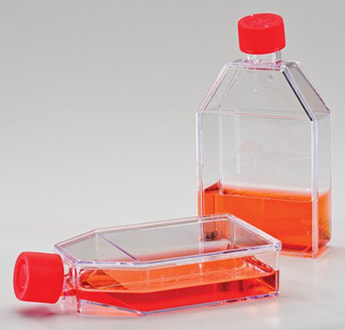
Modern day plastic culture flasks
So who was Norman Heatley and what does he have to do with Microbiology?
Who was Norman Heatley?
Who was Norman Heatley?
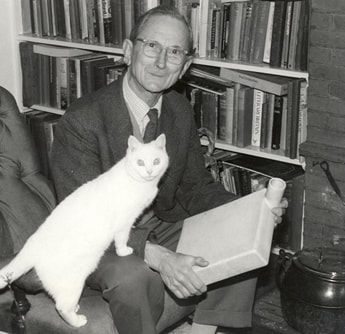
Behind every successful human is a rather talented cat!
Norman Heatley was actually a Chemist, not a Medical Doctor nor a Microbiologist. He was born in Suffolk, UK, and studied Natural Sciences at Cambridge University where he eventually earned his PhD in 1933. He went to work as a Professor at Oxford University before being seconded in 1940 to a research team to help them solve a particular problem.
The leader of this new research team was a chap called Howard Florey (an Australian pharmacologist and pathologist), who along with Ernest Chain (a German-British biochemist), was trying to work out how to take the theoretical potential of Alexander Fleming’s discovery of penicillin and translate it into a meaningful treatment for bacterial infections. The problem Florey and his team had was they could not manufacture enough penicillin to conduct a clinical trial.
Enter our hero, Norman Heatley…
After seeing the successful experimental treatment of deliberately infected mice who survived a serious infection because they were given penicillin, Heatley came up with a way to produce more of the drug. He did this by designing a flask for culturing the fungi so that they could grow large volumes in small spaces and then extract the penicillin from the “mould juice”.
The leader of this new research team was a chap called Howard Florey (an Australian pharmacologist and pathologist), who along with Ernest Chain (a German-British biochemist), was trying to work out how to take the theoretical potential of Alexander Fleming’s discovery of penicillin and translate it into a meaningful treatment for bacterial infections. The problem Florey and his team had was they could not manufacture enough penicillin to conduct a clinical trial.
Enter our hero, Norman Heatley…
After seeing the successful experimental treatment of deliberately infected mice who survived a serious infection because they were given penicillin, Heatley came up with a way to produce more of the drug. He did this by designing a flask for culturing the fungi so that they could grow large volumes in small spaces and then extract the penicillin from the “mould juice”.
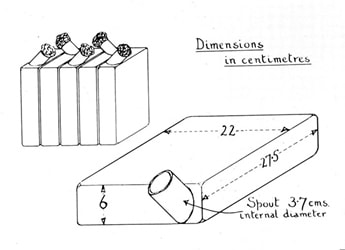
Heatley’s design for the culture vessel
This may look simple but it’s really rather ingenious. The square design allows the flasks to be stacked next to each other wasting less space than cylindrical bottles. They are also of sufficient volume (>3.5L) to hold a lot of liquid so that they didn’t need thousands of bottles. Finally, they were made of ceramic (the only material available in wartime England as glass manufacture was used for the war effort). Ceramic cut the light off from the sample so the fungi and penicillin didn’t get degraded. Also, the position of the spout (in the corner at an angle) means that even with the flask lying down the contents don’t come pouring out. Genius!!!
The manufacturer was James Macintyre & Co. from Burslem in The Potteries, UK and they made loads of these things…
The manufacturer was James Macintyre & Co. from Burslem in The Potteries, UK and they made loads of these things…
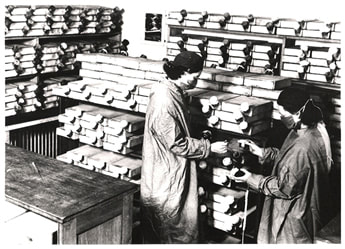
Culturing Penicillium notatum to produce penicillin (note the early use of Covid-19 PPE!)
Heatley was not only instrumental in the production of the penicillin, but he also devised the way of extracting the penicillin from the “mould juice” by changing its pH as well as a method for working out how much penicillin was in the resulting extraction, allowing for the team to work out dosages.
The first human patient
The first patient to be treated with Heatley’s experimental extracted penicillin was a police constable who had scratched his mouth with a rose thorn and was dying from septicaemia. The Florey team grew the penicillin in these quirky bottles and gave him a 160mg infusion of penicillin. After an initial response and improvement, the team ran out of penicillin; they just could not grow the “mould juice” quickly enough to treat him. They even tried collecting penicillin from his urine to recover any antibiotic that had been passed out through his kidneys. Sadly, this first patient treated with penicillin died, but the “concept” of using penicillin was valid.
With the eyes of a modern Microbiologist, it is clear that the dose of penicillin they used was way to low - we would use 1.2g 4 hourly to treat our patients; that’s 7.2g per day, or 45x as much as was given to this first patient!!!!!
Make penicillin not War
Once the promise of penicillin had been realised, Florey and Heatley relocated to the USA where a larger team were eventually able to scale up the process of producing penicillin. By D-Day (June 1944) they had produced enough penicillin to be able to treat all 40,000 allied soldiers injured during the Normandy invasion! Incredible!!
And the Nobel Prize for Medicine goes to…
In 1945 the Nobel Prize for Medicine was awarded for the discovery of penicillin, going to Alexander Fleming (1928), Howard Florey and Ernest Chain… however there was no mention for our hero Norman Heatley or his “bed pan”! And yet without Heatley there would have been no penicillin. It’s not really that Heatley was deliberately snubbed or left out, but rather that the Nobel Prize for each discovery can only be given to a maximum of 3 people according to the rules of the award, and the actions of the others were deemed more important.
However after 45 years Heatley’s work was recognised, when in 1990 Oxford University awarded him an Honorary Doctorate of Medicine, the first time in the University’s 800 years that one had been awarded to a non-medic!
Sadly, Norman Heatley died in 2004 at the ripe old age of 92… I wonder how many times in his own lifetime he was treated with the antibiotic that he helped discover? Now that would have been a medical consultation I would have loved to be involved in…
“We’re going to treat you with an antibiotic, good old-fashioned penicillin”
“Not so old I’ll have you know young Doctor; I was there when it was discovered!”
So, how much does a ceramic “bedpan” for growing fungi cost?
Well back in December 1940 an original Heatley Vessel cost 10 shillings or 50p to produce, about £28 in current prices, and loads were made so surely it isn’t that valuable hey? The headmaster had even been allowing the school children to hand it around during assemblies…
Well the BBC Antiques Roadshow valuation for this original Heatley Vessel in perfect condition… was an eye-watering £20,000! And if you think they were exaggerating then think again, one sold in 2004 for £19,120 (and it wasn’t even clean!).
But, as a Microbiologist the value of the discovery of penicillin is priceless. Way to go Norman Heatley, a Microbiology Hero!
The headmaster went a rather funny colour and was told to put it in glass cabinet rather than allow it to be man-handled by the kids!
The first human patient
The first patient to be treated with Heatley’s experimental extracted penicillin was a police constable who had scratched his mouth with a rose thorn and was dying from septicaemia. The Florey team grew the penicillin in these quirky bottles and gave him a 160mg infusion of penicillin. After an initial response and improvement, the team ran out of penicillin; they just could not grow the “mould juice” quickly enough to treat him. They even tried collecting penicillin from his urine to recover any antibiotic that had been passed out through his kidneys. Sadly, this first patient treated with penicillin died, but the “concept” of using penicillin was valid.
With the eyes of a modern Microbiologist, it is clear that the dose of penicillin they used was way to low - we would use 1.2g 4 hourly to treat our patients; that’s 7.2g per day, or 45x as much as was given to this first patient!!!!!
Make penicillin not War
Once the promise of penicillin had been realised, Florey and Heatley relocated to the USA where a larger team were eventually able to scale up the process of producing penicillin. By D-Day (June 1944) they had produced enough penicillin to be able to treat all 40,000 allied soldiers injured during the Normandy invasion! Incredible!!
And the Nobel Prize for Medicine goes to…
In 1945 the Nobel Prize for Medicine was awarded for the discovery of penicillin, going to Alexander Fleming (1928), Howard Florey and Ernest Chain… however there was no mention for our hero Norman Heatley or his “bed pan”! And yet without Heatley there would have been no penicillin. It’s not really that Heatley was deliberately snubbed or left out, but rather that the Nobel Prize for each discovery can only be given to a maximum of 3 people according to the rules of the award, and the actions of the others were deemed more important.
However after 45 years Heatley’s work was recognised, when in 1990 Oxford University awarded him an Honorary Doctorate of Medicine, the first time in the University’s 800 years that one had been awarded to a non-medic!
Sadly, Norman Heatley died in 2004 at the ripe old age of 92… I wonder how many times in his own lifetime he was treated with the antibiotic that he helped discover? Now that would have been a medical consultation I would have loved to be involved in…
“We’re going to treat you with an antibiotic, good old-fashioned penicillin”
“Not so old I’ll have you know young Doctor; I was there when it was discovered!”
So, how much does a ceramic “bedpan” for growing fungi cost?
Well back in December 1940 an original Heatley Vessel cost 10 shillings or 50p to produce, about £28 in current prices, and loads were made so surely it isn’t that valuable hey? The headmaster had even been allowing the school children to hand it around during assemblies…
Well the BBC Antiques Roadshow valuation for this original Heatley Vessel in perfect condition… was an eye-watering £20,000! And if you think they were exaggerating then think again, one sold in 2004 for £19,120 (and it wasn’t even clean!).
But, as a Microbiologist the value of the discovery of penicillin is priceless. Way to go Norman Heatley, a Microbiology Hero!
The headmaster went a rather funny colour and was told to put it in glass cabinet rather than allow it to be man-handled by the kids!
 RSS Feed
