Microbiology Nuts & Bolts
  • Home
  • Basic Concepts
    • What is infection?
    • Normal flora
    • Diagnosing infection
  • Microbiology
    • Basic bacterial identification
    • Interpreting bacteriology results
    • Interpreting serology results
  • Infection Control
    • What is infection control?
    • Universal precautions
    • MRSA
    • Clostridium difficile
  • Clinical Scenarios
    • Respiratory infections
    • Urinary infections
    • GI infections >
      • D&V
      • CDAD
    • CNS infections
    • Skin & bone infections
    • Sepsis
  • Antibiotics
    • Antimicrobial Stewardship
    • How antibiotics work
    • How to choose an antibiotic?
    • Reviewing antibiotics
    • Antibiotic resistance
    • Testing antibiotic resistance
    • Penicillin allergy
    • Theraputic Drug Monitoring
  • Guidelines
  • Lectures & Lecture Notes
    • Medical Students
    • Curriculum for the Foundation Program
    • Foundation Year 1
    • Foundation Year 2
    • Other Lectures
  • The Bug Blog
  • Buy the book...
  • NEW Edition Updates
  • Peer Reviews
  • Want to know more?
  • Contact

In Infection Control no one can hear you scream…

27/10/2022

 
The Duty Microbiologist had just got to the duty desk when the phone rang, 09:02 no time to even pour a cup of coffee… this was going to be a bad day!
 
The ward doctor from Phlegming Ward was treating an unknown illness in a patient who had just returned from a holiday from the Indian Subcontinent.
 
It sounded bad… they were septic, with low blood pressure and a very high lactate. The Critical Care Outreach Team were on their way but the team were worried the normal IV Amoxicillin, Gentamicin and Metronidazole for sepsis wasn’t working!
 
“Change to Meropenem, give a dose of Amikacin stat and isolate the patient ASAP. Also send us a blood culture, sputum and urine and we’ll see what we can grow. As there is a risk of enteric fever, make sure you write High Risk on the request form please!”
 
However, at the same time the Sister from Phlegming Ward was calling the Infection Control Nurses to say she thought they might have an outbreak as they had a number of patients that had all been in the same bay who were now all suddenly septic!
 
The Infection Control Nurses told the Sister they’d drop everything and hurry along to assess the situation; so they brought forward elevenses to a 10am cake break and then off they went… which is pretty speedy for IC! (…I am going to be in so much trouble for writing that!!!)
                                                     
When they arrived on Phlegming Ward the corridor looked dark and gloomy. The overhead strip lights flickered on and off like a broken strobe light at an 80s disco. A trail of bright pink slime oozed its way across the broken floor tiles disappearing off into the distance. Nothing moved; everything was silent. The ICNs looked through the doors to see carnage. To be fair it was often a chaotic place where no one ever washed up their coffee cups, so mould outbreaks were common. They entered the ward. This seemed different; the patients looked terrible, emaciated and sunken eyed which, although food was being cut back to make hospital savings, shouldn’t be noticeable quiet yet. There was also blood and vomit everywhere, as well as some funny looking bright pink stains no one quite knew what to make of, and the over-worked staff looked like they had finally lost the plot! 
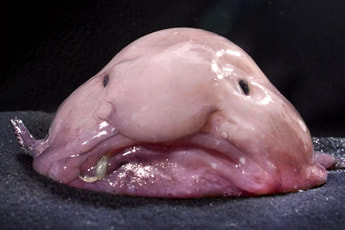
Blob fish - Psychrolutes marcidus
This is real!

Read More

Are you pooping out polio?

11/8/2022

 
In 1988 the World Health Organisation announced its intention to eradicate polio by 2000. It was a lofty goal but one that was achievable as polio only infects humans, and so if they can stop polio spreading between people then it can be eradicated, and the way to stop spreading polio is to vaccinate against it.
Oral polio vaccine
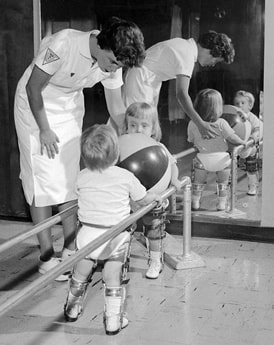
Editor Chief in Charge, in her previous incarnation as a physiotherapist, treated polio patients with calipers like this... yep she's that old... Oi, they were adults who had had it years earlier, not children

Read More

Stop monkeying around… an update…

20/5/2022

 
​Back in 2018 I wrote a blog called “Don’t monkey around with the pox”. The subject was a disease called Monkey Pox, and I wrote it because the UK had recently diagnosed the first 2 cases ever in the UK. The patients were both from Nigeria. Monkey Pox is a rare infection though, and it wasn’t clear if we would see other cases again… until now…!
Monkey pox
​At the beginning of May this year a new case of Monkey Pox was diagnosed in a patient who had recently come to the UK from Nigeria. Then towards the middle of May 2 further cases of Monkey Pox were diagnosed in the same household, but these patients had no contact with the first case, or any travel history, and in fact it’s not clear where they acquired their infections from. All very worrying…
 
Then a further 4 cases have been diagnosed! Also unrelated to the previous cases and with no obvious source for the infection… however these cases have all occurred in gay or bisexual men who have sex with men (MSM).
 
This is extremely concerning! We have now had 6 cases of Monkey Pox in people who have not been to Africa and who have no obvious source for the infection. This means we have an unknown source of infection in the UK population. On top of this we now have cases in a group of the population where spread may occur more readily through sexual activity. It is very unlikely that these 7 cases are going to be the last cases identified!
 
So, time for an update… what has changed since the blog in 2018?
 
Epidemiology
Monkey Pox is still a rare infection. In the Democratic Republic of the Congo where most cases have been reported, surveillance studies during “outbreaks” have shown an incidence of past infection between 0.001-0.05% of the population, that’s about 1 in 100,000, but that’s when they are looking for cases during an outbreak, not all the time, so the true rate could be lower than this.
 
There are 2 main types of Monkey Pox, West African and Central African. West African causes a milder infection with a mortality of about 1%; Central African is more severe with a mortality of about 10%. Fortunately for us, the cases in the UK so far have all been the West African type and are therefore mild infections.
 
Person-to-person transmission is rare, with a household secondary case rate of 8%, but transmission can still occur from touching infective lesions, respiratory droplets and possibly also sexual contact.
 
Case definition
The current UK case definition for a probable case of Monkey Pox is:
  • Symptoms including: fever >38.5oC, headache, myalgia, arthralgia, back pain or lymphadenopathy
PLUS
  • Contact with a case of Monkey Pox within 21 days of symptom onset OR travel to West Africa or Central Africa within 21 days of symptom onset OR MSM
 
The rash of Monkey Pox is vesicular (small fluid filled blisters) starting 1-5 days after onset of fever. It usually starts on the face or genitalia and then spreads to the rest of the body. It may look similar to chicken pox. Skin lesions eventually scab over, dry and then fall off.
 
Any patient meeting the case definition should be URGENTLY discussed with the Health Security Agency (HSA) in the UK, previously known as Public Health England, as well as the High Security Infectious Diseases Unit at the Royal Free Hospital London and the Imported Fever Service at Porton Down. This is for a surveillance activity rather than “infection severity” at the moment but as we all know, new infections that can spread can become a problem!
 
Treatment
There is no specific treatment for Monkey Pox, and most cases are mild and self-limiting. In severe cases the drug Cidofovir has been used. Cidofovir is a nucleoside analogue drug; it mimics a component of the virus’s genetics which when incorporated into the new virus particle causes a fault and the virus can’t reproduce. The main problems with Cidofovir are that it is only available intravenously and it is very toxic to kidneys.
 
There are now 2 new experimental drugs for treating pox-illnesses like Monkey Pox (and even Smallpox!) that might be available for very unwell patients in an off-license capacity:
  • Brincidofovir is a derivative of Cidofovir which is orally bioavailable and is less toxic to kidneys
  • Tecovirimat is a novel drug that is also orally bioavailable but works by preventing newly reproduced virus from wrapping up into a small package prior to release – there is experimental evidence that Tecovirimat and Brincidofovir are synergistic with each other (the combined effect is greater than either on its own)
 
Prevention
The main methods of prevention are avoidance of exposure to infected animals and people, good infection control practice and vaccination (the Smallpox vaccine is 85% effective at preventing Monkey Pox).
 
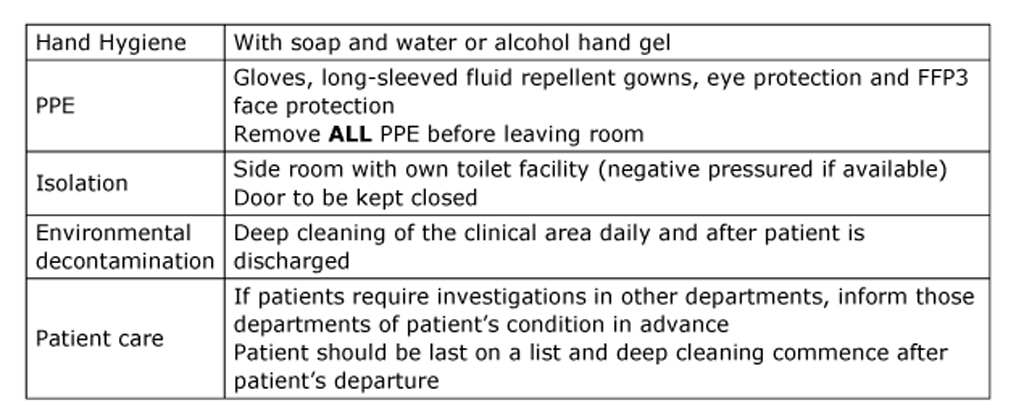
There are no definitive infection control policies for this infection yet, but in the meantime the following for respiratory spread infections would be appropriate:
Infection Control Policy for respiratory spread infections - monkey pox
Click for larger image
​In the event of a sustained outbreak in the UK it is possible that the HSA might start to ring vaccinate at risk people (e.g. MSM population) to prevent spread of the virus within the wider population.
 
Now we wait to see what happens. Will there be further cases? Will the virus become established in the MSM population? If it does we could be in for another viral “pandemic”… oh joy!
 
Oops since writing this on Tuesday we now have 20 cases in the UK… did I say watch this space?!

The outbreak that wasn’t…

8/4/2022

 
I can just imagine the conversation:
 
“Goldberger, I need you to go down South and investigate an outbreak” demanded the Surgeon General.
 
“Yes Sir!”, replied Dr Joseph Goldberger, “Errr, what outbreak am I investigating Sir?”
 
“The leprosy-like skin infection outbreak that no one has ever been able to discover a cause for of course, it’s affecting millions of people down there.”
 
“Yes Sir!” replied Dr Goldberger again, whilst probably thinking with a sinking heart “OMG, this sounds like a nightmare…”
 
But when you work for an organisation such as the US Public Health Service in 1915 and your boss tells you to do something you pack your bags and off you go. So he did…
Pellagra - corn and beans

Read More

The germ distributor

26/11/2021

 
​“In the winter of 1906 I was called on to investigate a household epidemic of typhoid fever which had broken out in the latter part of August at Oyster Bay, New York”
 
Wow! They don’t write journal articles like that anymore. It sounds like an opening from a Sherlock Holmes story, or some other detective or investigator dreamed up by H.P. Lovecraft. Instead, it’s the opening sentence of a scientific article entitled “The work of a chronic typhoid germ distributor” from the Journal of the American Medical Association (JAMA) way back in 1907, by a chap called George Soper (the hero of our story), and it deals with one of the most famous/infamous outbreaks of typhoid of modern times.
 
Cue dramatic music…!
Sherlock Holmes outbreaks

Read More

International Infection Prevention Week – thank you Ronnie!

21/10/2021

 
Back in 1986 a certain ex-film star, and former President of the United States, set in motion an annual event known as International Infection Prevention Week (IIPW). I had no idea Ronald Reagan was the person who started this, but apparently, he was! Okay, so along with trying to save lives he was also keen on reducing the amount of money being spent dealing with healthcare associated infections, but let’s give him the benefit of the doubt and say it was mainly about saving lives.
 
Since its inception IIPW has spread around the globe and now is an annual event in such diverse places as Australia, the United Kingdom, the Middle East, and Southeast Asia.
 
Each year IIPW has a theme. Recent themes include Vaccines are Everybody’s Business in 2019, Protecting Patients Everywhere in 2018, Antibiotic Resistance in 2017 and Break the Chain of Infection in 2016.
 
This year’s theme is “Make Your Intention Infection Prevention” …catchy huh? Our Infection Control Team has been running around the hospital sporting fancy T-shirts looking like “professional footballers”!
 
They told me that the idea behind this year’s theme is to encourage everyone, the general population as well as healthcare workers, to put infection control practices at the heart of what they do; make them an instinctive and everyday part of how we go about our lives.
 
Now this may seem obvious, surely everyone does this already …but do they? How many people wash their hands regularly? How many people self-isolate when they are unwell? How many people carry tissues around in case they sneeze? My suspicion is …not many!
 
Let’s look at the elephant in the room …Covid-19 (clearly my favourite topic!).
 
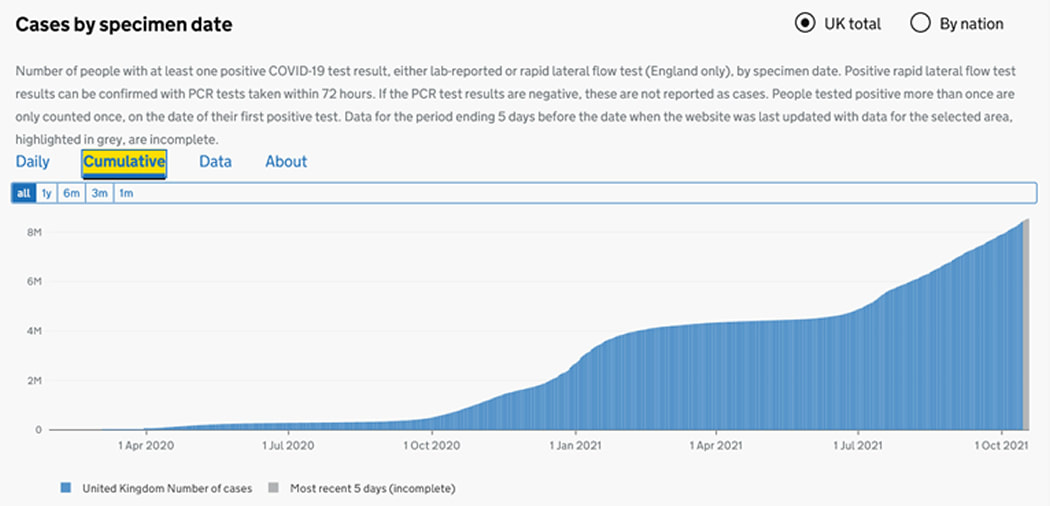
Below is a graph from the Department of Health (UK) website showing the cumulative number of cases of Covid-19 in the UK since the pandemic began. 
Cumulative Covid-19 cases Oct 2021
Click for larger image

Read More

Take a look at this graph, what do you think it shows?

5/2/2021

 
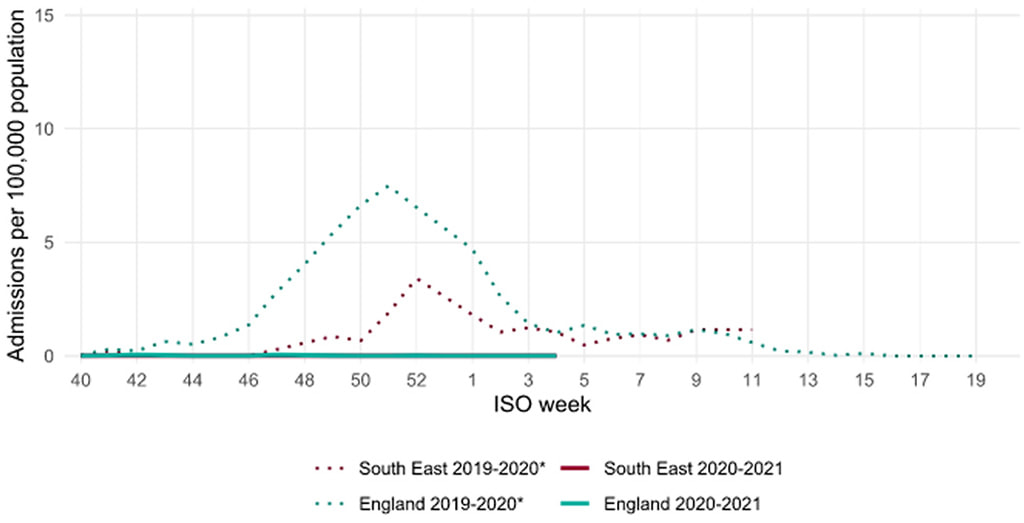
Hospital admissions with confirmed influenza – SARI Watch
Click for larger image

Read More

PPE - If it doesn't help, perhaps we could try and ditch it?

26/11/2020

 
Earlier this year we all went into lockdown… remember? Not like the current lockdown where most people seem to be carrying on regardless, I mean when the streets were eerily quiet, and our capital cities looked like a set from a post-apocalyptic movie.
 
During this time, I remember seeing news stories about the positive impact of the Covid-19 pandemic on the environment as everyone moved indoors, cars stayed off the roads and heavy industry shut down. There were striking pictures of Nitric Oxide levels over China showing a massive reduction in the production of greenhouse gases. It seemed that something good may come out of the pandemic, almost as if the Earth was pressing the reset button and taking back control.
Covid-19 Nitric Oxide levels over China
Source: https://earthobservatory.nasa.gov/images/146362/airborne-nitrogen-dioxide-plummets-over-china

Read More

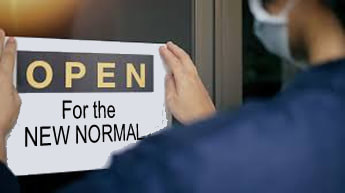
Covid-19 - What will the “new normal” look like?

6/11/2020

 
We’re all waiting for a vaccine against SARS Cov2, right? Once we have a vaccine, we can all get back to normal and 2020 will be a period of time that we look back on as a bad time in our lives. Well this is what I hear a lot of people saying… SPOILER ALERT! I think we need a reality check; the new normal is NOT going to look like the old normal.
Covid-19 the new normal

Read More

In a quandary over quarantine

20/8/2020

 
More and more of us are being affected by imposed quarantine measures (sometimes at very short notice!). Holiday plans are all over the place (we are not going to the Drakensberg’s, our flight is cancelled, UK residents are banned and there is 14 days of quarantine even if we could get in! Boom, our holiday’s gone BUST!). There is mass quarantining on a global scale. But added to this is the fact that in the UK you must also quarantine yourself if you are exposed to a person with Covid-19. No ifs, no buts, do not pass “Go”, do not “collect £200”. But where does the term quarantine come from, what does it mean and are we “actually” using it correctly?
Picture
No longer travelling to the Drakensberg... Not happy!!

Read More
<<Previous

    RSS Feed

    Facebook has deleted the Microbiology Nuts & Bolts pages - if you want your weekly dose of microbiology then you will need to come here, and we look forward to you continuing to read it!

    Blog Author:

    David Garner
    Consultant Microbiologist
    Surrey, UK

    Please DO NOT advertise products and conferences on our website or blog

    Categories

    All
    Antibiotic Resistance
    Antibiotics
    Basic Concepts
    Clinical Scenarios
    Guidelines
    Infection Control
    In The News
    Microbiology

    Archives

    November 2022
    October 2022
    September 2022
    August 2022
    July 2022
    June 2022
    May 2022
    April 2022
    March 2022
    February 2022
    January 2022
    December 2021
    November 2021
    October 2021
    September 2021
    August 2021
    July 2021
    June 2021
    May 2021
    April 2021
    March 2021
    February 2021
    January 2021
    December 2020
    November 2020
    October 2020
    September 2020
    August 2020
    July 2020
    June 2020
    May 2020
    April 2020
    March 2020
    February 2020
    January 2020
    December 2019
    November 2019
    October 2019
    September 2019
    August 2019
    July 2019
    June 2019
    May 2019
    April 2019
    March 2019
    February 2019
    January 2019
    December 2018
    November 2018
    October 2018
    September 2018
    August 2018
    July 2018
    June 2018
    May 2018
    April 2018
    March 2018
    February 2018
    January 2018
    December 2017
    November 2017
    October 2017
    September 2017
    August 2017
    July 2017
    June 2017
    May 2017
    March 2017
    February 2017
    January 2017
    December 2016
    November 2016
    October 2016
    September 2016
    August 2016
    July 2016
    June 2016
    May 2016
    April 2016
    March 2016
    February 2016
    January 2016
    December 2015
    November 2015
    October 2015
    September 2015
    August 2015
    July 2015
    June 2015
    May 2015
    April 2015
    March 2015
    February 2015
    January 2015
    December 2014
    November 2014
    October 2014
    September 2014
    August 2014
    July 2014
    June 2014
    May 2014
    April 2014
    March 2014
    February 2014
    January 2014
    December 2013
    October 2013
    September 2013
    August 2013
    July 2013

    Categories

    All
    Antibiotic Resistance
    Antibiotics
    Basic Concepts
    Clinical Scenarios
    Guidelines
    Infection Control
    In The News
    Microbiology

    RSS Feed

Powered by Create your own unique website with customizable templates.